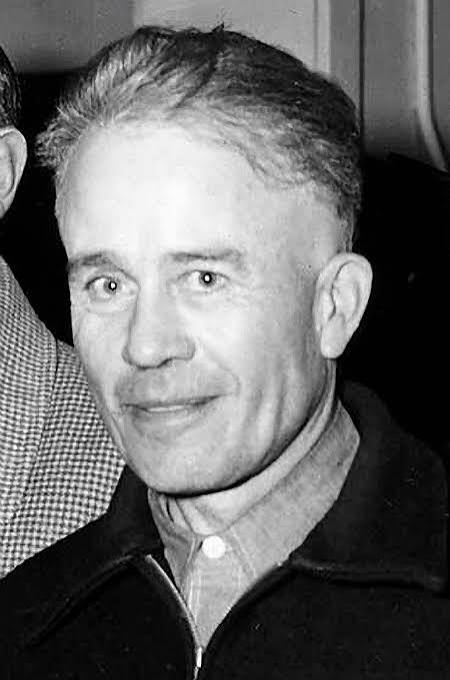
Ed Gein biography offers a disturbing but historically significant look into the life of one of America’s most infamous criminals. Born in Wisconsin in 1906, Edward Theodore Gein lived a largely isolated life before his crimes became widely known following his arrest in 1957. His case later attracted enormous public attention and influenced several fictional horror characters.
Early Life of Ed Gein
Edward Theodore Gein was born on August 27, 1906, in La Crosse County, Wisconsin. He grew up with his older brother, Henry, in a rural environment near Plainfield. His family life was complicated, particularly because of his mother, Augusta Gein, whose strict religious beliefs had a powerful influence on her sons.
After the death of his father in 1940 and his brother Henry in 1944, Gein became increasingly isolated. His mother died in 1945, leaving him alone on the family farm. Historical accounts describe how he preserved parts of the house associated with his mother while becoming increasingly withdrawn from the outside world.
Ed Gein and the 1957 Investigation
The case changed dramatically in November 1957 when Bernice Worden, a Plainfield hardware-store owner, disappeared. Investigators followed evidence that eventually led them to Gein and his rural property.
On November 16, 1957, authorities arrested Gein and searched his farmhouse. The investigation uncovered evidence of grave robbing and human remains. Gein later confessed to killing Worden and also admitted responsibility for the 1954 disappearance of Mary Hogan. However, investigators were unable to definitively connect him to a larger number of killings, making it important to distinguish documented facts from later rumors.
How Many People Did Ed Gein Kill?
One of the most frequently searched questions about the case is how many people Ed Gein actually killed. The historical record firmly links him to two murders: Bernice Worden and Mary Hogan.
At the same time, authorities discovered evidence that Gein had exhumed bodies from local graves. This distinction matters because sensational accounts sometimes describe him as responsible for many more murders than the evidence establishes.
Understanding the difference between confirmed crimes, confessions and speculation is essential when studying the Ed Gein case from a historical perspective.
The Trial and Mental Health Findings
Following his arrest, Gein was initially considered unfit to stand trial and was committed to a psychiatric institution. Years later, doctors determined that he was competent to participate in legal proceedings.
In 1968, Gein was tried for the murder of Bernice Worden. He was found guilty but was also determined to have been legally insane at the time of the crime. He therefore spent the remainder of his life in psychiatric institutional care rather than serving a conventional prison sentence.
Ed Gein’s Influence on Popular Culture
The Ed Gein case became one of the most influential true-crime stories in American history. His crimes and disturbing relationship with his mother became part of the inspiration behind fictional horror characters.
His story has been associated with characters such as Norman Bates from Psycho, Leatherface from The Texas Chain Saw Massacre, and Buffalo Bill from The Silence of the Lambs. These fictional characters are not direct biographies of Gein; rather, filmmakers and writers drew selected elements from his case and transformed them into fictional stories.
Ed Gein’s Death
Ed Gein remained institutionalized for the rest of his life. He died on July 26, 1984, at the age of 77 after suffering from health complications, including cancer. His death marked the end of the life of a man whose case had already become deeply embedded in American true-crime and horror culture.
Why the Ed Gein Case Still Attracts Attention
Decades after his death, interest in Ed Gein continues because his story sits at the intersection of criminal history, psychology, investigative work and popular culture. However, separating historical evidence from horror mythology is particularly important.
The documented case is already disturbing without exaggeration. Gein’s isolated lifestyle, grave-robbing activities, confirmed murders, psychiatric evaluations and influence on fictional horror created a case that continues to be studied by historians and true-crime audiences.
Final Thoughts
An accurate Ed Gein biography should focus on verified historical information rather than sensational claims. His life demonstrates how a relatively obscure rural criminal case became a major part of American cultural history. From his early years in Wisconsin to his 1957 arrest, 1968 trial and eventual death in institutional care, the Ed Gein story remains one of the most widely discussed cases in the history of American true crime.
For readers interested in criminal history, the most valuable approach is to examine the documented evidence while clearly separating confirmed facts from speculation and fictional portrayals.